
The Other Big 13U Adjustment: Moving to Drop 5 Bats
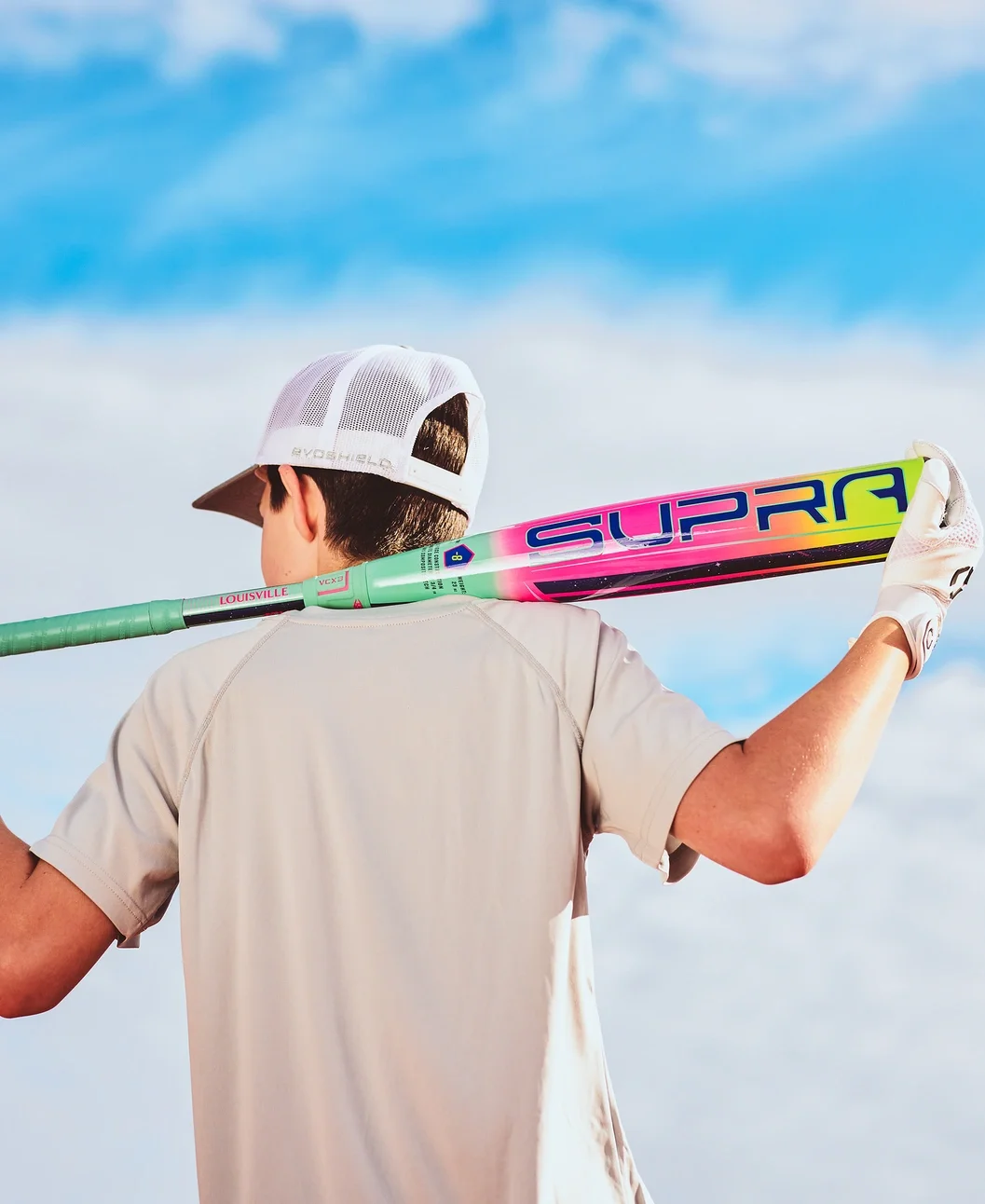
Moving from 12U to 13U baseball comes with changes that are impossible to miss. The field gets dramatically larger, the bases stretch to 90 feet, the pitching rubber moves to 60 feet, 6 inches, and suddenly throws that once seemed routine require considerably more arm strength. Outfielders have acres of new grass to cover, baserunners have more room to create havoc, and pitchers are introduced to a running game that begins to look much more like the baseball they watch at higher levels. There is another transition happening at the same time, however, and it receives surprisingly little attention until a player actually picks up his new bat. For many 13U travel players, the move to the big field also means saying goodbye to the drop 10 or drop 8 they have been swinging and stepping into the considerably heavier world of the drop 5.
Three ounces may not sound particularly dramatic until those ounces are added to the end of something a player is trying to accelerate through the hitting zone in a fraction of a second. A 31-inch drop 8 has a listed weight of 23 ounces, while the same 31-inch bat at drop 5 weighs 26 ounces. That is a meaningful increase, particularly for a 12- or 13-year-old whose body, strength and swing mechanics are still developing. The hitter must continue getting the barrel to the baseball on time while controlling significantly more mass, and a swing that worked perfectly with a lighter bat may suddenly reveal inefficiencies that were previously easy to hide. The transition is not simply about getting stronger. It is about learning how to control a heavier barrel without sacrificing the timing, sequencing and bat speed that made the player successful in the first place.
So far, at least from what we have seen around the Hammerheads, the transition has been much less traumatic than some parents might expect. Players who developed good swings at 12U generally appear capable of adapting quickly, particularly when the bat is well matched to their strength and swing style. One Hammerheads player provides a useful real-world example. He spent last season swinging the drop 10 Louisville Slugger Supra and finished his 12U season with 22 home runs, then moved directly into a 31-inch, 26-ounce 2027 Supra drop 5 as the team entered 13U. The home-run environment has obviously changed a little now that a 12- or 13-year-old is staring at fences that can approach 360 feet, so nobody should be waiting for another 22 balls to disappear over the wall anytime soon. What matters more is that the heavier bat itself has not created the dramatic adjustment that might have been expected.
That distinction is important because the goal of moving to drop 5 should never be to preserve 12U statistics. The bigger field changes offensive baseball just as much as it changes defense, and balls that once cleared a youth fence may now become hard line drives, doubles into the gaps or deep fly balls. A hitter's definition of success has to mature along with the field. The heavier bat can actually become part of that development by encouraging stronger contact, better sequencing and more efficient use of the entire body through the swing. Players begin learning that generating damage is not simply about swinging harder. It is about delivering the barrel efficiently while controlling enough mass to make that contact matter.
That brings us to the expensive part.
Walk into a baseball retailer or start searching online for a premium USSSA drop 5 and the choices become overwhelming almost immediately. Louisville Slugger, Easton, Rawlings, DeMarini and Marucci all offer legitimate high-end options, and most of them cost enough that buying the wrong one is an especially irritating mistake. Marketing departments will happily tell parents that every new barrel is hotter, every sweet spot is larger and every connection system is more advanced than anything humanity has previously engineered. What they rarely explain very well is that the best-performing bat in the world can still be the wrong bat for a particular hitter.
That is why our list is not really a ranking from one through five. Think of it instead as five different answers to five slightly different questions. These five bats represent a mix of current premium options and proven models that illustrate the different swing profiles, construction styles and feel available to players moving into drop 5.
Louisville Slugger Supra -5: The Complete Package
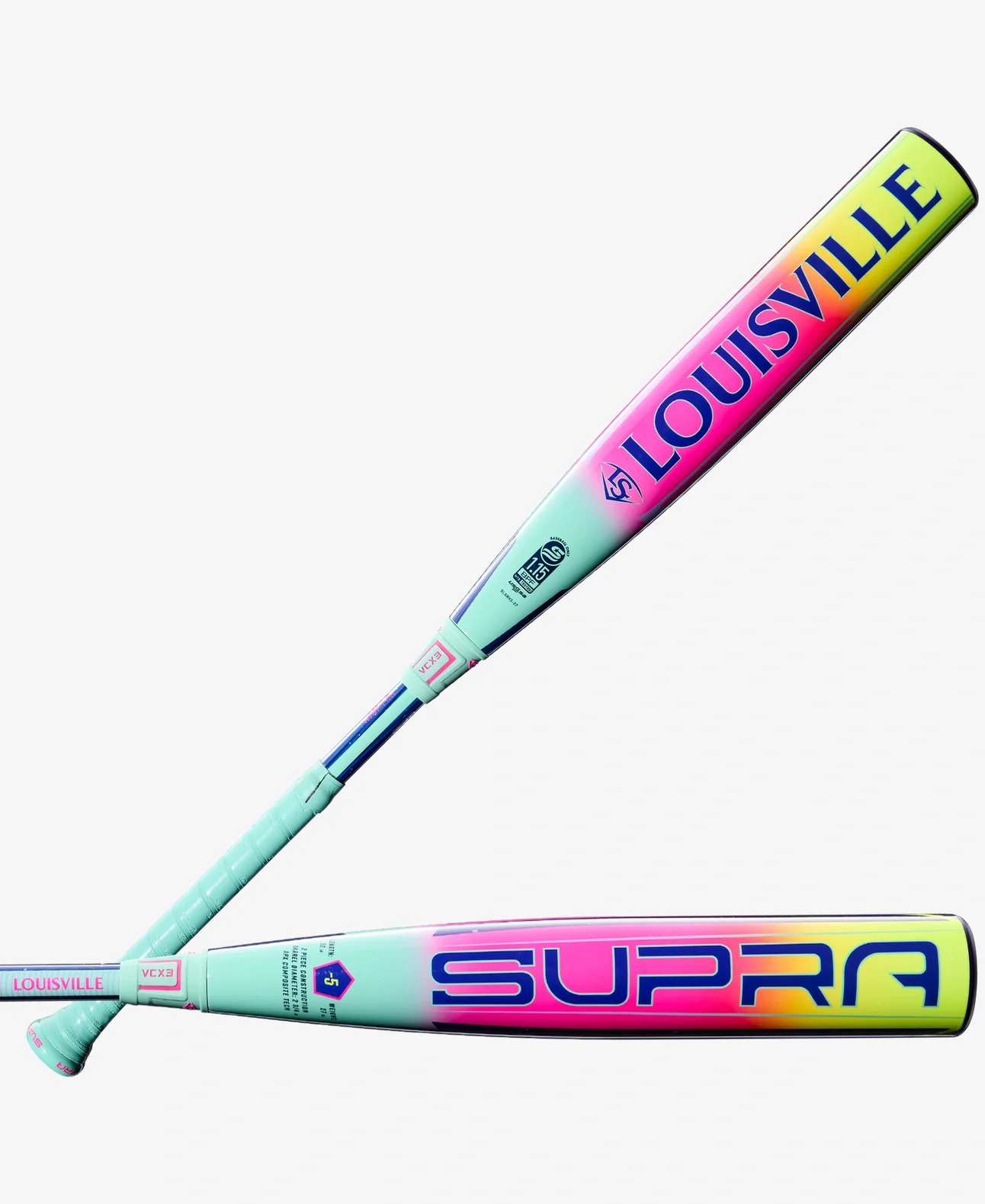
The 2027 Louisville Slugger Supra -5 may be the easiest bat on this list to recommend to a broad range of accomplished 13U hitters because it does not force the player into an extreme swing profile. Louisville describes the Supra as balanced while still emphasizing power, which is an unusually useful combination for a player making the jump to a heavier bat. Rather than feeling like the barrel is dragging the player's hands through the zone, the Supra is designed to preserve the kind of athletic swing that many players developed with lighter bats. That matters enormously at 13U because gaining three ounces is challenging enough without simultaneously asking a hitter to adapt to an aggressively end-loaded feel. Louisville itself now describes the Supra as the centerpiece of its USSSA lineup, and the 2027 version remains a premium $399.95 option.
The Supra makes particular sense for a hitter who already generates legitimate bat speed and wants more mass behind the baseball without feeling as though he has picked up a sledgehammer. It is also an intuitive transition for a player who already liked the Supra in drop 10 or drop 8 because the overall personality of the bat remains familiar even as the weight increases. That continuity should not be underestimated. Hitters develop preferences for how a barrel moves, how contact feels in their hands and how much they perceive the barrel during the swing. When a player already trusts a bat family and is producing good swings with it, there is not always a compelling reason to introduce something dramatically different just because a new season begins.
The Bat Bros recently took the 2027 Supra onto a Major League field for testing, which is worth watching because it gives families something manufacturer descriptions cannot: real swings, real sound and visual context for how the bat behaves. Watch the Baseball Bat Bros test the 2027 Supra For hitters who want a premium composite bat with a strong combination of control, feel and offensive ceiling, the Supra deserves to be one of the first bats they actually swing before making a decision.
Best fit: advanced all-around hitters, players moving directly from a lighter Supra, and hitters who want power without giving up a balanced swing.
Potential drawback: a player who actively wants an extremely barrel-heavy power bat may find the balance more neutral than he prefers.
Easton Hype Fire -5: Big Barrel Confidence
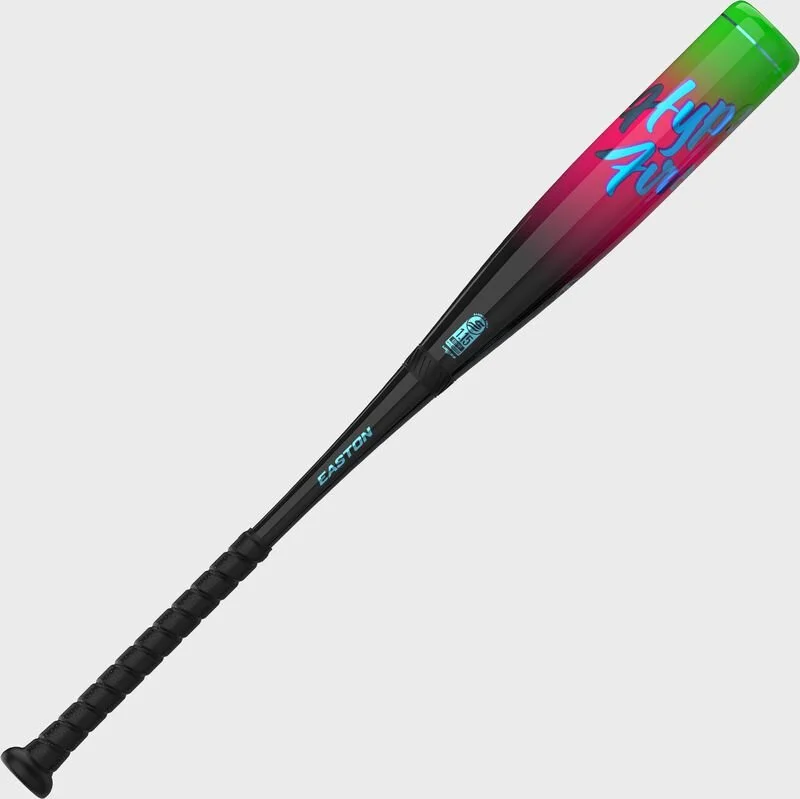
No modern USSSA bat discussion survives very long before somebody mentions the Easton Hype Fire, and at this point the name has almost become part of travel baseball culture. The 2027 Hype Fire -5 is a two-piece composite bat built around Easton's TCT composite barrel, ConneXion Max system and Opti-Flex handle. More importantly for the 13U player, the drop 5 version maintains a balanced swing profile rather than becoming dramatically end loaded simply because more weight has been added. That means stronger young hitters can get the additional mass they need while still maintaining reasonable control of the barrel. Easton lists the current 2027 USSSA Hype Fire at $399.99 and offers it in drop 10, drop 8 and drop 5 configurations.
The Hype Fire's personality is largely about confidence in the barrel. Easton has consistently emphasized sweet-spot size and composite response in this family, and that forgiving sensation is part of why it became so popular with youth hitters. A hitter who is transitioning into drop 5 may appreciate knowing that slightly imperfect contact does not necessarily produce the harsh feedback associated with some stiffer one-piece bats. The two-piece construction also helps manage vibration, which can matter for young hitters who immediately lose confidence after getting rung up on an inside pitch. The result is a bat that makes particular sense for a player who wants premium composite performance but does not necessarily want the bat to feel demanding.
There is a bit of history around the Hype Fire drop 5 that parents researching older models may encounter online. Perfect Game temporarily restricted drop 5 Hype Fires in 12U competition in 2024, but subsequently clarified that all years and models of the Hype Fire drop 5 were approved for other age groups, while Perfect Game's broader 12U rule prohibited drop 5 bats in that age division. That distinction matters because old forum posts can make the issue sound much more dramatic or current than it actually is. Watch the Baseball Bat Bros test the 2025 Easton Hype Fire
Best fit: hitters who love a big, forgiving composite barrel, players who dislike hand sting, and stronger hitters who still want a balanced feel in drop 5.
Potential drawback: players who love the immediate rigid feedback of a one-piece alloy may find the Hype Fire's smoother composite personality less satisfying.
Rawlings Icon -5: Smooth, Familiar and Extremely Easy to Like
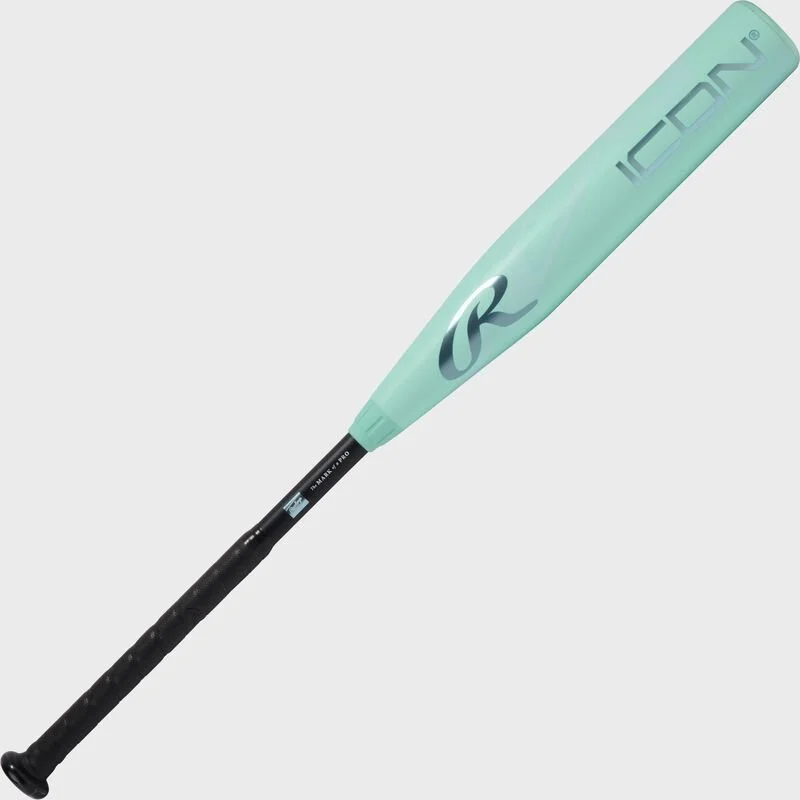
The Rawlings Icon -5 occupies an interesting place in the premium USSSA market because it is one of those bats that seems to make sense for an unusually large range of hitters. Rawlings describes the current Icon around its seamless composite barrel and tuned swing weight, and the drop 5 is available alongside drop 8 and drop 10 versions. The company's 2026 Icon remains one of its flagship USSSA bats, with lengths extending through 32 inches and an original retail price around $399.99. It is the sort of bat that rarely requires a complicated explanation when a player swings it. The appeal is simply that it tends to feel smooth, comfortable and manageable while still delivering the performance expected from a premium composite.
That makes the Icon particularly attractive for a player whose parents are worried that moving to drop 5 will wreck his mechanics. The goal in that situation should be to avoid making the bat feel like an obstacle. If a hitter can pick up a heavier bat and maintain his posture, sequencing and ability to turn the barrel on time, that is far more important than choosing whichever model produced the highest isolated exit velocity in somebody else's testing. The Icon's broad appeal comes from its ability to give hitters a premium composite barrel without making the swing feel unnecessarily complicated. For a player whose game depends on consistently finding barrels rather than simply trying to create maximum force, that can be extremely valuable.
The Icon has also received significant attention in independent bat-testing circles, including Bat Bros testing of previous USSSA versions. That does not mean every new colorway or model year should automatically be assumed identical, but it does reinforce how firmly the Icon family has established itself among high-end USSSA options.
Best fit: line-drive hitters, players prioritizing barrel control and comfort, and families looking for a premium composite that does not require an unusual swing style.
Potential drawback: hitters deliberately looking for a very stiff or aggressively barrel-dominant sensation may prefer something else.
DeMarini Zen -5: The Bat-Speed Specialist
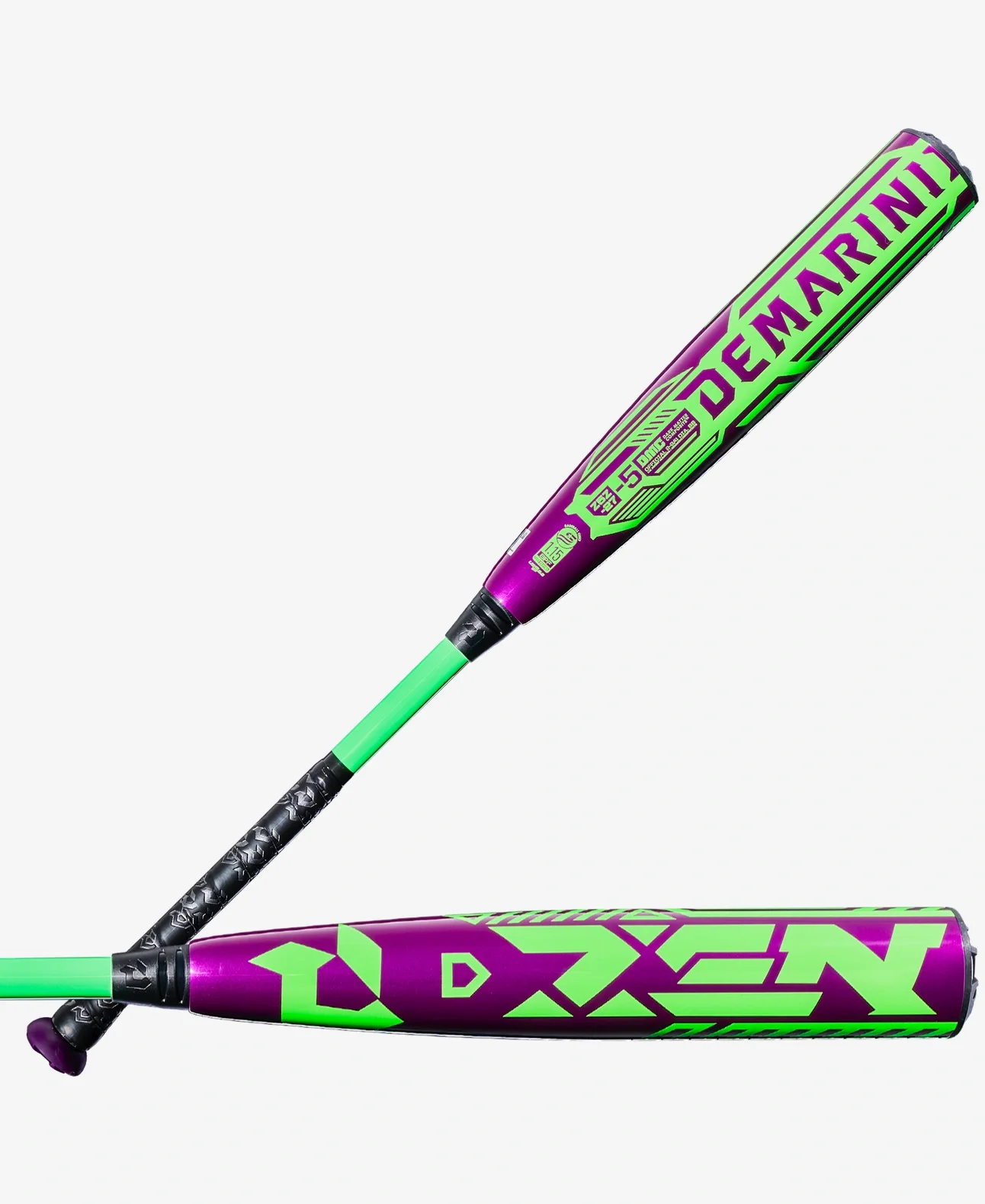
The 2027 DeMarini Zen -5 makes perhaps the clearest sales pitch of any bat on this list because DeMarini explicitly designed the two-piece composite construction around weight distribution, balance, bat speed and barrel control. Its Dark Matter Composite barrel is paired with DeMarini's Direct Connection and Damplify Knob, with the latter designed to reduce vibration before it reaches the hitter's hands. The Zen also uses a lightweight end cap intended to reduce swing weight and improve barrel control. Put those pieces together and the identity becomes obvious: this is a drop 5 built for players who want the benefits of additional mass without allowing that mass to take over the swing.
That makes the Zen especially interesting for a player who is mechanically sound but not necessarily the biggest or strongest kid in the lineup. There is a major difference between being strong enough to physically move a 26-ounce bat and being able to hit well with a 26-ounce bat. The latter requires the player to maintain bat speed, adjust to velocity and still get the barrel into the zone consistently. A balanced bat such as the Zen gives that hitter a better chance to preserve the qualities that already make his swing successful while gradually becoming comfortable with the additional weight. This is why automatically putting every strong-looking 13-year-old into the most end-loaded bat available is usually a bad way to shop.
The Baseball Bat Bros have spent considerable time with the modern Zen family, including a full USSSA review that gives parents a much better feel for the bat than a product description ever could. Watch the Baseball Bat Bros test the DeMarini Zen Watching experienced hitters discuss how easily a barrel moves through the zone can be useful, but it should still be treated as research rather than a substitute for putting the bat in the actual player's hands.
Best fit: hitters who prioritize bat speed, balance and control, particularly players concerned that drop 5 might slow their swing.
Potential drawback: a physically mature power hitter who specifically wants to feel a lot of barrel may prefer something with a stronger sense of mass out front.
Marucci CATX2 -5: For the Hitter Who Wants to Feel Everything
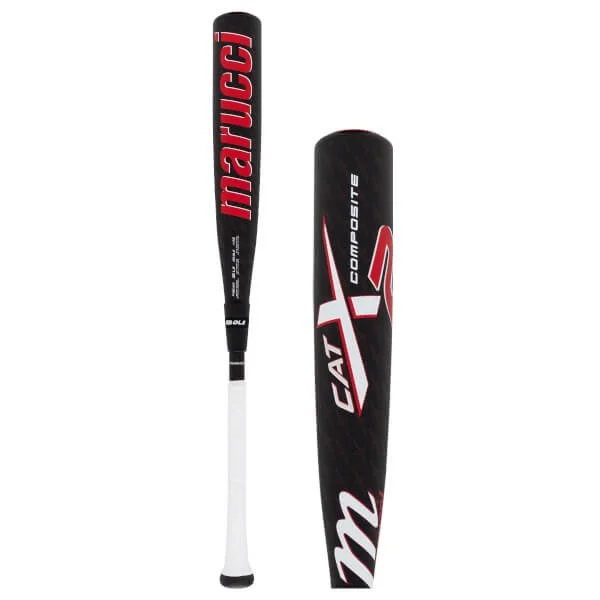
The Marucci CATX2 -5 is the deliberately different choice on this list. Unlike the composite-heavy options above, the standard CATX2 is rooted in Marucci's one-piece alloy philosophy, giving hitters the direct and immediate feedback that has long made the CAT family popular. Marucci incorporates anti-vibration technology in the knob and end cap to reduce unwanted sting, but this is still fundamentally a bat for players who appreciate the connection and stiffness of a one-piece design. There is less mystery between the player's hands and the barrel. When the hitter squares the baseball, he knows it. When he misses it, the bat is not particularly interested in protecting his feelings.
For certain hitters, that is exactly the point. Strong players with compact swings often love one-piece bats because they do not want flex or a cushioned sensation at contact. They want the barrel to feel like an extension of their hands, and they value feedback even when that feedback occasionally reminds them that they missed the sweet spot. Alloy construction also eliminates the composite break-in conversation and can make the CATX2 attractive as a workhorse bat for high-volume training. Marucci's CAT family has survived generation after generation because it offers a very recognizable feel, and players who love that feel tend to know almost immediately.
This is also where trying bats before buying becomes especially important. A player who has spent years swinging two-piece composites may pick up a one-piece CATX2 and immediately hate the sensation. Another hitter may take three swings and wonder why anyone bothers building bats in two pieces. Neither player is wrong. They simply have different preferences, and those preferences begin mattering more as bats get heavier.
Best fit: strong hitters with compact swings, players who prefer stiff one-piece feedback, and athletes who want a durable alloy option.
Potential drawback: hitters accustomed to the forgiving feel and vibration dampening of a two-piece composite may find it harsh.
So Which Drop 5 Is Actually the Best?
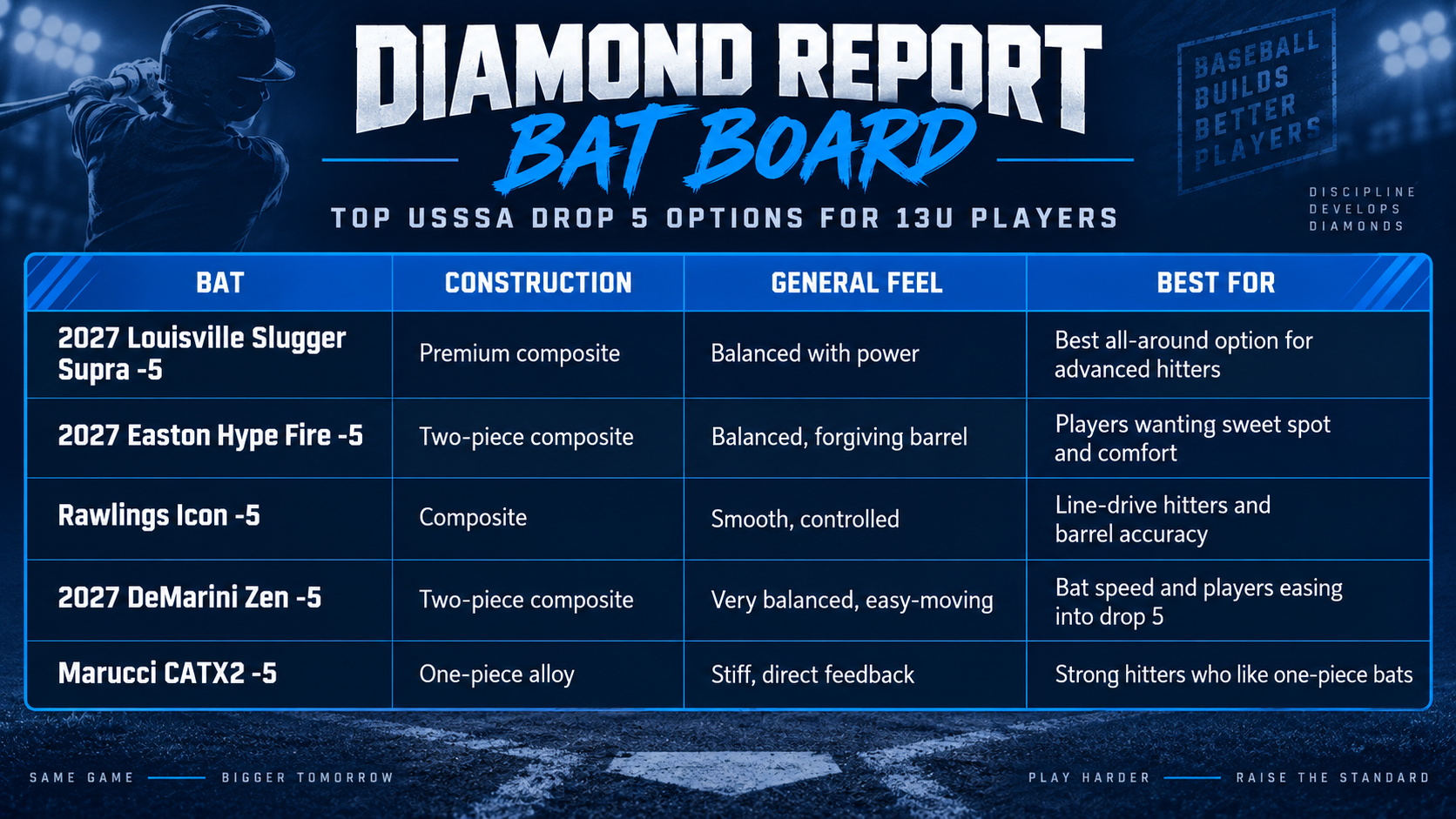
This is the part where most bat articles are supposed to manufacture a winner, put a crown next to it and pretend the argument has been settled forever. That would make for a neat graphic, but it would not be particularly useful. The truth is that five excellent hitters could reasonably choose five different bats from this list because they are not all trying to solve the same problem. A 95-pound contact hitter moving reluctantly out of a drop 8 does not need the same bat as a physically mature power hitter who has been waiting all summer to put more mass behind the baseball. The correct question is therefore not, “What is the best drop 5?” It is, “What is the best drop 5 for this hitter?”
If I were standing in a cage with five bats and a player making the transition today, I would start by watching what happens to his swing rather than staring at the logo. Does the barrel begin dragging when he moves into drop 5? If so, the Zen, Supra or another genuinely balanced option deserves serious attention. Does he already possess excellent bat speed and want a large, forgiving composite barrel? The Hype Fire belongs in the conversation immediately. Does he value a smooth composite feel and consistent barrel control? The Icon is an easy bat to put in his hands. Does he have a strong, compact swing and love stiff feedback? Give him the CATX2 and see if his face lights up after the first barrel.
There is another rule that may save parents several hundred dollars: do not buy the bat you want your child to be able to swing. Buy the bat he actually swings well today. Parents can become obsessed with preparing players for the next level and accidentally skip the level they are currently playing. Yes, BBCOR is coming. Yes, drop 3 eventually becomes part of the equation. That does not mean a 13-year-old needs to struggle through an unnecessarily heavy or end-loaded bat for a year because somebody believes suffering builds character. Development happens when the player is challenged without destroying the mechanics that got him there.
The move from drop 10 or drop 8 into drop 5 is therefore best viewed as a bridge. It introduces significantly more mass while still allowing players to take advantage of the larger barrels and higher-performing USSSA environment available at this age. A year or two later, many of these players will be facing another transition into BBCOR, where the performance standard, barrel restrictions and drop 3 weight create an entirely new challenge. The hitter who learns to control a drop 5 without losing bat speed is doing more than selecting a new piece of equipment. He is preparing his body and swing for the increasingly demanding versions of baseball waiting ahead.
The Field Is Bigger. The Bat Is Heavier. The Standard Is Higher.
There is something fitting about all of these changes arriving together at 13U. The sport suddenly asks players to throw farther, run farther, think faster and swing something heavier, almost as though baseball has decided that childhood dimensions are officially over. Some players adjust immediately. Others need months before the larger field and heavier equipment begin feeling normal. Both experiences are completely reasonable because physical development at this age happens at wildly different rates. The job is not to rush every player toward the same destination at exactly the same speed.
For the Hammerheads, the early signs have been encouraging. The move to drop 5 has not looked like a crisis, and the boys appear increasingly comfortable handling the extra weight as they settle into the larger game around them. That does not mean the adjustment is finished, nor does it mean every player should swing the same bat. It simply means the step may look more intimidating on paper than it feels once good young hitters begin taking real repetitions. Like so much about 13U, the field initially looks enormous until players spend enough time on it.
The home runs may be harder to come by now. When the fences move hundreds of feet farther away, a ball that once sent a dugout into chaos might simply become a hard double into the gap, and there is absolutely nothing wrong with that. Players are no longer supposed to measure offensive success by whether every well-struck baseball clears a youth fence. At this stage, the better questions are whether the hitter is controlling the barrel, producing quality contact, driving the baseball with authority and building a swing that will survive the next transition too.
That is ultimately what the move to drop 5 is supposed to accomplish. The heavier bat is not simply another piece of equipment to adjust to, but part of the larger progression toward a stronger, more efficient and more complete hitter. Learning to control the additional weight without sacrificing bat speed, timing or barrel accuracy forces players to refine the mechanics that will matter even more as they move toward BBCOR and higher levels of the game. In that sense, the drop 5 is not an obstacle to get through. It is another developmental step, and for players who handle it well, an important one.
