
Line Drive Indoor Batting: A Jupiter Baseball Resource Worth Knowing
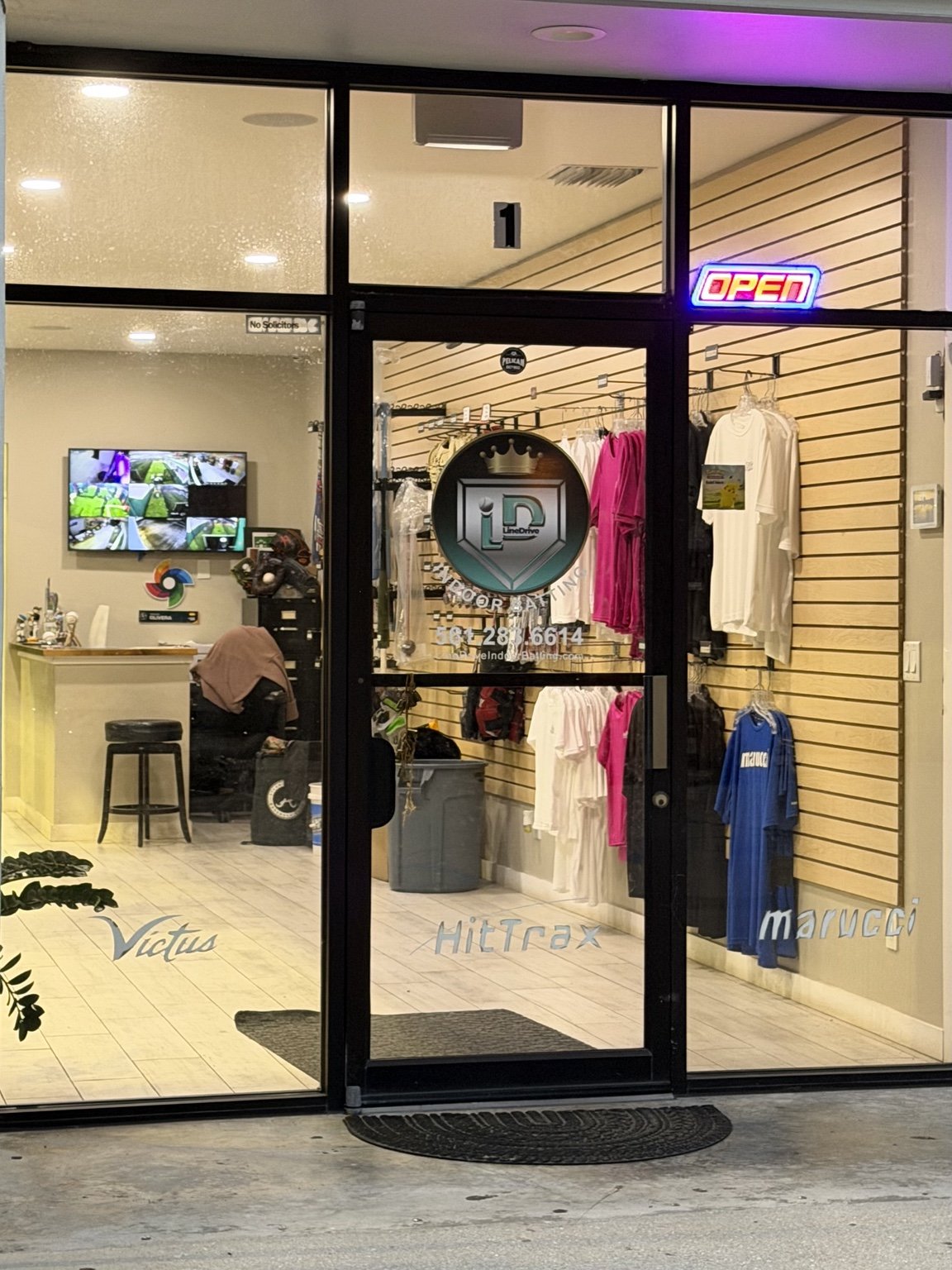
For baseball and softball families in northern Palm Beach County, finding a place to get meaningful work in can become almost as important as finding the right team. Practices get canceled, fields close, South Florida weather changes by the hour, and sometimes a player simply needs more repetitions than a normal team schedule can provide. That is where Line Drive Indoor Batting has become such a valuable resource in Jupiter. Located on Jupiter Park Circle, Line Drive gives players a place to hit, pitch, train and work with instructors without depending on field availability or the weather outside. For our family, however, Line Drive has become much more than a convenient place to rent a batting cage. It has been part of our children’s development for years, and much of that story begins with owner and professional baseball instructor Manny Olivera.
More Than a Place to Take Swings
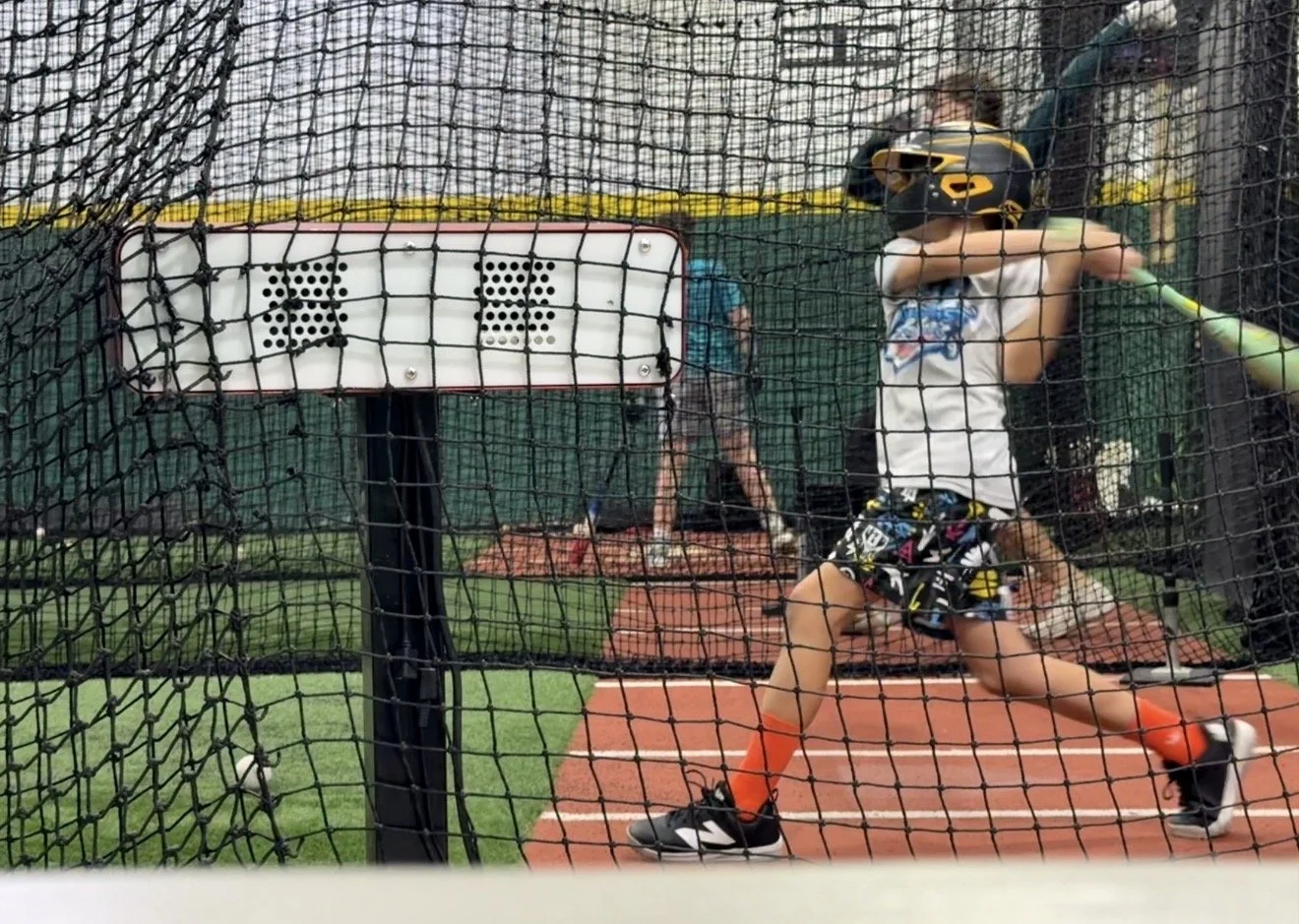
There is an important difference between going somewhere to hit baseballs and going somewhere designed for actual player development. Line Drive offers up to five indoor cages configured for different types of work, including computerized pitching machines, HitTrax technology, live-arm batting practice, team sessions and softball training. One cage also includes an indoor pitching mound with Rapsodo technology, allowing pitchers to measure information such as velocity, spin rate, spin efficiency, movement and release characteristics. Other cages can be used for lessons, tee work, live pitching or more traditional machine work, giving players different ways to train depending on what they actually need that day. The facility serves baseball and softball players ranging from younger beginners to experienced high school and advanced athletes. (Line Drive Indoor Batting)
That variety matters because effective training is rarely about doing the same thing every visit. A hitter may need high-volume repetitions one day, pitch-recognition work another day and mechanical instruction during a private lesson later in the week. A pitcher may need to work on delivery and command rather than simply throwing as hard as possible into a net. A softball player may need machine work at game speed, while an entire team may need multiple cages for an organized indoor practice. Line Drive is useful because it can accommodate those different situations without pretending that every athlete needs the same workout. For families who already spend much of their week moving between practices, games and lessons, having those options in one local facility makes training considerably easier.
The Technology Is Useful When It Has a Purpose
Technology has become a huge part of modern baseball training, but numbers are only useful when players and coaches understand what they mean. Line Drive’s HitTrax system can track metrics such as exit velocity, launch angle, distance, point of impact and batted-ball outcomes while also providing video and trend information. Catchers can use the technology for measurements such as arm strength, pop time and throwing accuracy, while pitchers have access to Rapsodo data from the indoor mound. The facility also uses HomePlate computerized pitching machines that can be programmed for different pitch types, including fastballs, breaking balls and changeups. That allows hitters to work on pitch recognition and timing instead of simply seeing the same straight machine pitch over and over again. (Line Drive Indoor Batting)
None of that means a thirteen-year-old needs to become a data scientist before stepping into the box. The best use of technology is when it supports what a good instructor already sees rather than replacing coaching with a screen full of numbers. Players can feel that a swing was different, but seeing exit velocity or ball flight immediately afterward can help connect the adjustment to an actual result. Pitchers can work on movement or mechanics while using objective information to see whether the change is doing what they intended. Over time, those measurements also make it easier to identify trends instead of judging progress entirely by memory or one good session. Used correctly, the technology becomes another coaching tool rather than the entire point of the workout.
Manny’s Lab
The part of Line Drive that has mattered most to our family is the instruction. Manny Olivera’s baseball background includes experience as both a professional player and coach, with roles connected to the Miami Marlins and Chicago Cubs, as well as coaching experience internationally with the Spanish national team and in Taiwan. Line Drive offers private instruction with him through what the facility calls “Manny’s Lab,” serving players from beginners through the high school level. His background is impressive, but a résumé alone is not what keeps a family bringing children back to the same instructor week after week and year after year. That only happens when the coach knows how to communicate, understands the individual athlete and earns the trust of both the player and the family. (Line Drive Indoor Batting)
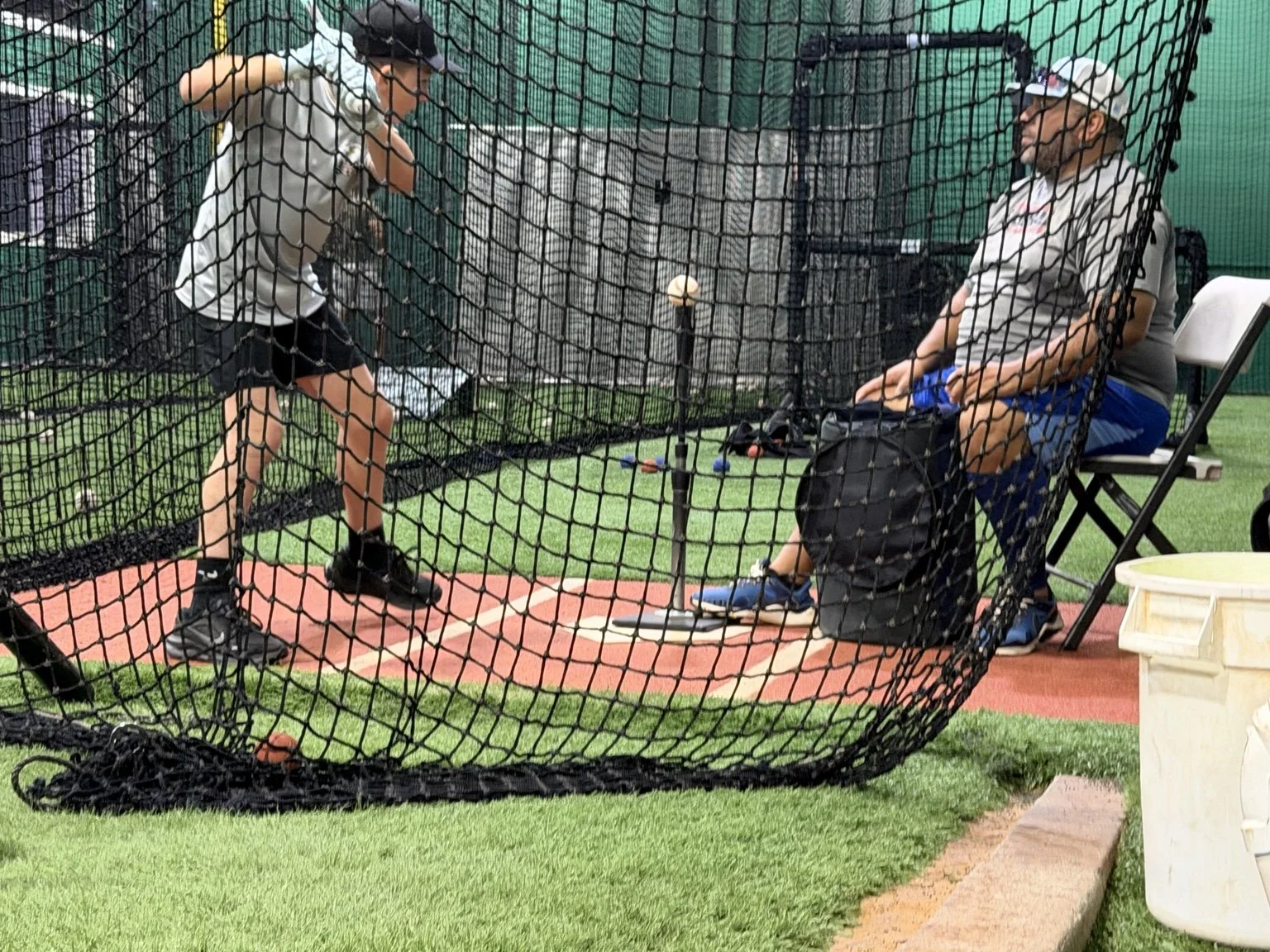
My son and daughter have trained with Manny for more than five years, usually on a weekly basis, and that consistency has become one of the foundations of their development. They did not begin working with him because something was broken or because one of them suddenly entered a slump. The lessons became part of the normal process of getting better, with small adjustments accumulating over hundreds of sessions instead of searching for a quick fix when something went wrong. That long-term relationship also means Manny knows their habits, strengths, tendencies and personalities in a way an occasional instructor simply cannot. He has seen them grow physically, move through different levels of competition and adjust to the changing demands of baseball and softball as they have gotten older. That history allows instruction to build from one lesson to the next rather than starting over every time they walk into the cage.
With Freddy in particular, it is impossible for our family to separate the player he has become from the years of work he has done with Manny. Team practices have been important, backyard work has been important and Freddy has obviously had to put in the repetitions himself, but professional instruction has given all of that work direction. As competition has increased and the game has become faster, the foundation built over years has become increasingly noticeable. The mechanics, approach and confidence that show up during games were not created during one breakthrough lesson. They were developed through thousands of swings, corrections, repetitions and conversations that began long before he reached 13U baseball. That is why we view private instruction as part of development rather than an emergency service for struggling players.
When Your Private Instructor Becomes Your Team Coach
Our connection with Manny eventually expanded beyond private lessons. After years of watching the way he worked with Freddy and understanding what professional instruction could bring to a young player, the opportunity developed for Manny to coach the Jupiter Hammerheads Black team itself. That created an unusual situation where Freddy’s longtime private instructor also became one of the professional coaches responsible for his team development. For a player, there is enormous value in having continuity between individual training and the expectations he encounters in games and team practices. The coach already understands what the player has been working on privately, while the instructor also gets to see how those skills translate under actual game pressure. In our case, that relationship has made Manny’s influence on Freddy’s baseball development even more significant.
It also reflects a larger philosophy behind the Hammerheads program. The organization has made a deliberate commitment to professional coaching rather than building the team around traditional parent coaching, and that comes with both financial cost and higher expectations. Players are being taught by coaches with professional baseball experience, but having those credentials does not eliminate the need for individual work outside team practices. If anything, it reinforces the idea that development happens through layers: team instruction, private instruction, independent repetitions and actual games. Manny’s involvement in both the individual and team sides of that equation gives our family a firsthand view of how those pieces can complement one another. The result is not that every player must follow the same path, but that serious development usually involves more than simply showing up twice a week and hoping improvement happens automatically.
You Do Not Need a Private Lesson to Use Line Drive
One of the things that makes Line Drive particularly useful is that families do not have to be private clients of Manny or another instructor to use the facility. Cages can be reserved directly online, which makes it easy for a player and parent to show up for extra repetitions without committing to a formal lesson. Line Drive currently allows cage scheduling several days in advance and offers individual rentals as well as packages and team rates. Players can use machine cages, HitTrax, live-arm spaces or other training configurations depending on availability and the type of session they are planning. That makes the facility useful for everything from a quick midweek hitting session to organized team training. (Line Drive Indoor Batting)
That flexibility is particularly valuable in South Florida, where weather can erase an outdoor practice with very little warning. A week of afternoon thunderstorms can mean several lost opportunities for a hitter who needs repetitions, and a flooded field does not care whether a tournament is approaching. Indoor training creates a way to maintain consistency when the outdoor schedule becomes unreliable. It also gives families control over training volume instead of depending entirely on what happens during organized team practice. A thirty-minute cage session can produce a large number of purposeful swings when the player arrives with an actual plan. Sometimes that focused half hour is more productive than standing around during a crowded two-hour team batting practice waiting for another turn.
Baseball and Softball Under the Same Roof
Line Drive is not exclusively a baseball facility, which matters in an area with a strong fastpitch softball community as well. The cages and pitching equipment support softball training, and the facility specifically promotes training opportunities for softball players alongside baseball. That has allowed both of our children to train in the same place despite playing different sports and developing different positional needs. For families with multiple athletes, having one familiar facility is an underrated convenience. It also reinforces the reality that many of the fundamentals of hitting development, repetition and individualized instruction apply across both games. (Line Drive Indoor Batting)
Our daughter’s development has benefited from the same long-term consistency even though her path as a softball player is different from Freddy’s path in baseball. Hitting instruction is not about forcing two athletes into the same swing or expecting identical results from different bodies and sports. Good instruction adapts to the player in front of the coach, which is another reason long relationships with instructors can become valuable. A coach gets to understand how an athlete learns, what cues work and when an adjustment needs to be made. Those details become increasingly important as players get older and the competition improves. The goal is not to manufacture identical swings but to help each athlete build something repeatable that holds up in competition.
Why Extra Work Matters More as Players Get Older
There is a point in youth sports where team practice alone becomes increasingly difficult to rely on for individual development. A coach responsible for an entire roster has limited time, and those hours have to include defense, offense, baserunning, situational work, pitching, team communication and game preparation. Even an excellent team practice cannot provide every player with the number of individualized repetitions needed to refine specific skills. That is where cage sessions, backyard work and professional instruction begin to separate themselves from normal team activity. The players who continue progressing are often the ones accumulating purposeful repetitions between practices rather than only during them. Line Drive provides a local place where that extra work can actually happen consistently.
That does not mean every child needs private lessons every week or that families should turn youth sports into a full-time occupation. Players still need rest, school, friends and enough distance from the game to continue enjoying it. Extra work is valuable only when it remains productive and when the athlete has some ownership of the process. There is a major difference between a child who wants to spend thirty minutes working on something and one being forced through endless repetitions because an adult believes more must always be better. The best development plans balance consistency with sustainability. A good training facility provides the opportunity, but the player and family still have to decide how that opportunity fits into the larger picture.
A Local Resource Worth Knowing
For Jupiter-area baseball and softball families, Line Drive fills a useful space between team practice and the backyard. A player can rent a cage, work with technology, schedule private instruction, train with a team or simply get extra swings without driving across Palm Beach County looking for an available facility. The operation is local, easy to schedule and built specifically around baseball and softball rather than treating cages as one attraction inside a much larger entertainment business. Line Drive is located at 3125 Jupiter Park Circle, Suite 1, and currently operates seven days a week, with weekday afternoon and evening hours and daytime weekend hours. Cage rentals can be scheduled directly through the facility’s website. (Line Drive Indoor Batting)
Our perspective on Line Drive is obviously personal because Manny has been part of our children’s baseball and softball lives for years. That relationship is precisely why we know what consistent professional instruction can look like over a long period of time rather than after one impressive lesson. The biggest compliment we can give the facility is not that it has HitTrax, pitching machines or advanced training technology, although all of those things are valuable. It is that Line Drive has become a place our kids associate with the work required to become better players, and a place where that work has produced results over time. For families in Jupiter looking for extra repetitions, indoor cages or professional baseball and softball instruction, Line Drive is a local resource worth knowing. Rent your cage today, or stop by and meet the people behind it. For our family, Manny has been one of the most important figures in our kids’ development, and Line Drive has become one of the places where that work happens.
