
Two days from now, Jupiter Hammerheads Black will head north for another weekend at the USSSA Space Coast Complex, but this trip will feel different from the ones that came before it. The team has played at Space Coast at younger ages, when the fields were smaller and the players were still learning what a true travel-baseball weekend felt like. Now they return as 13U players on the big fields, with longer games, bigger dimensions and a version of tournament baseball that asks more physically and mentally from everyone involved. The first-day schedule is set, unfamiliar opponents are waiting, and Saturday’s pool games will determine where teams land when the tournament shifts into single-elimination bracket play on Sunday. It is one of those weekends that reminds families why an away tournament can feel like much more than simply driving somewhere else to play baseball.
This weekend’s event, Be An ICON Powered by Rawlings ICON, runs October 24 and 25 at the USSSA Space Coast Complex in Viera and begins Saturday with two pool-play games for Jupiter Hammerheads Black. The Hammerheads open at 10:00 a.m. against the Southern Wildcats from West Virginia, a 13AA team entering the weekend with a 6-3 overall record and a four-game winning streak, before returning at 2:00 p.m. to face Weston Hawks 13U White from Florida. Both games will be played on the White DeMarini fields, giving the team an immediate mix of unfamiliar out-of-state competition and a Florida opponent they have not already seen repeatedly throughout the fall. Saturday’s results will determine seeding before the tournament shifts into single-elimination bracket play on Sunday, creating the familiar travel-ball rhythm of using pool play to earn the best possible path into elimination day. For a Hammerheads group that has been improving throughout the season, it is also a chance to see how that progress translates against fresh competition at one of the biggest youth baseball destinations in Florida.
Why Space Coast Feels Different
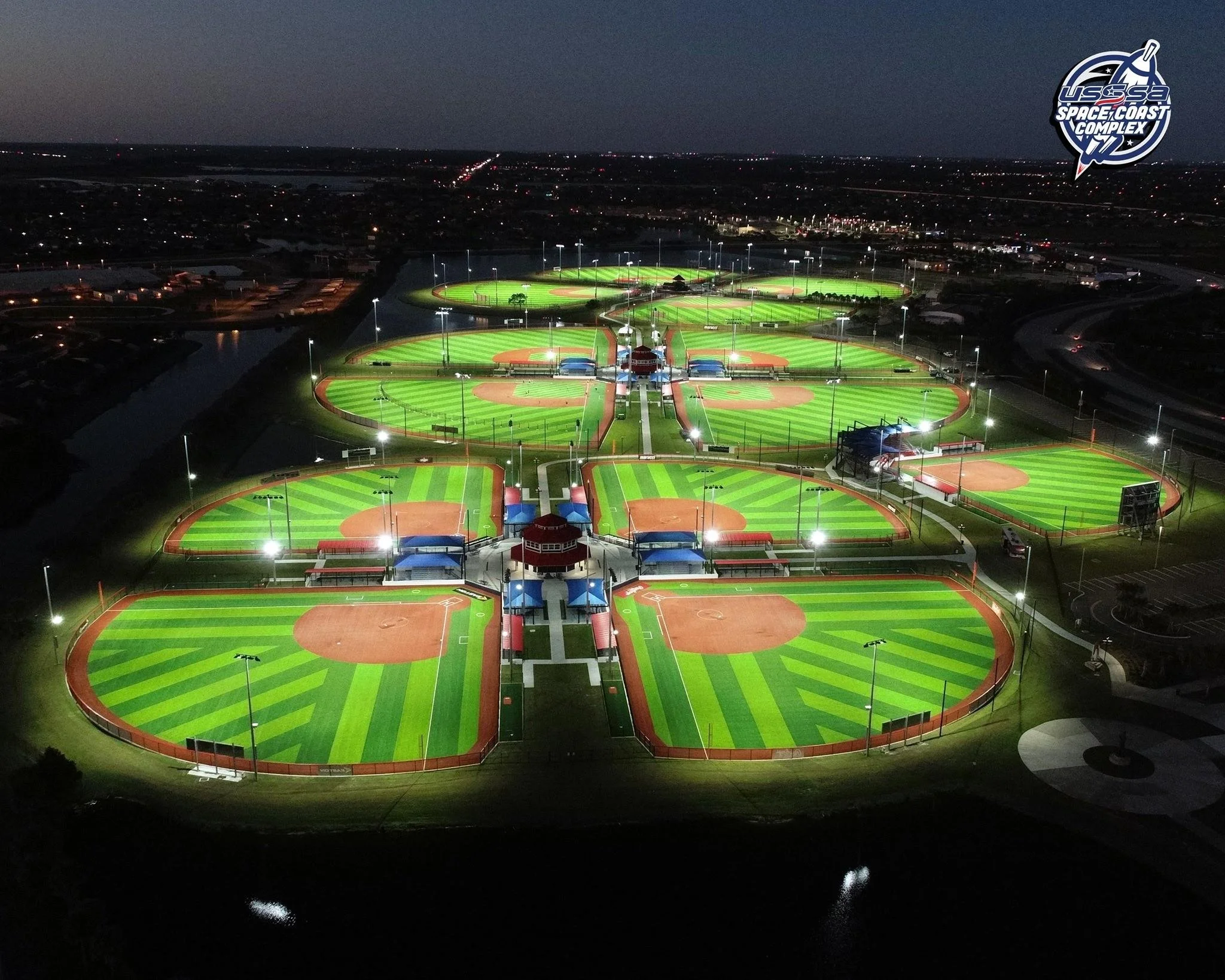
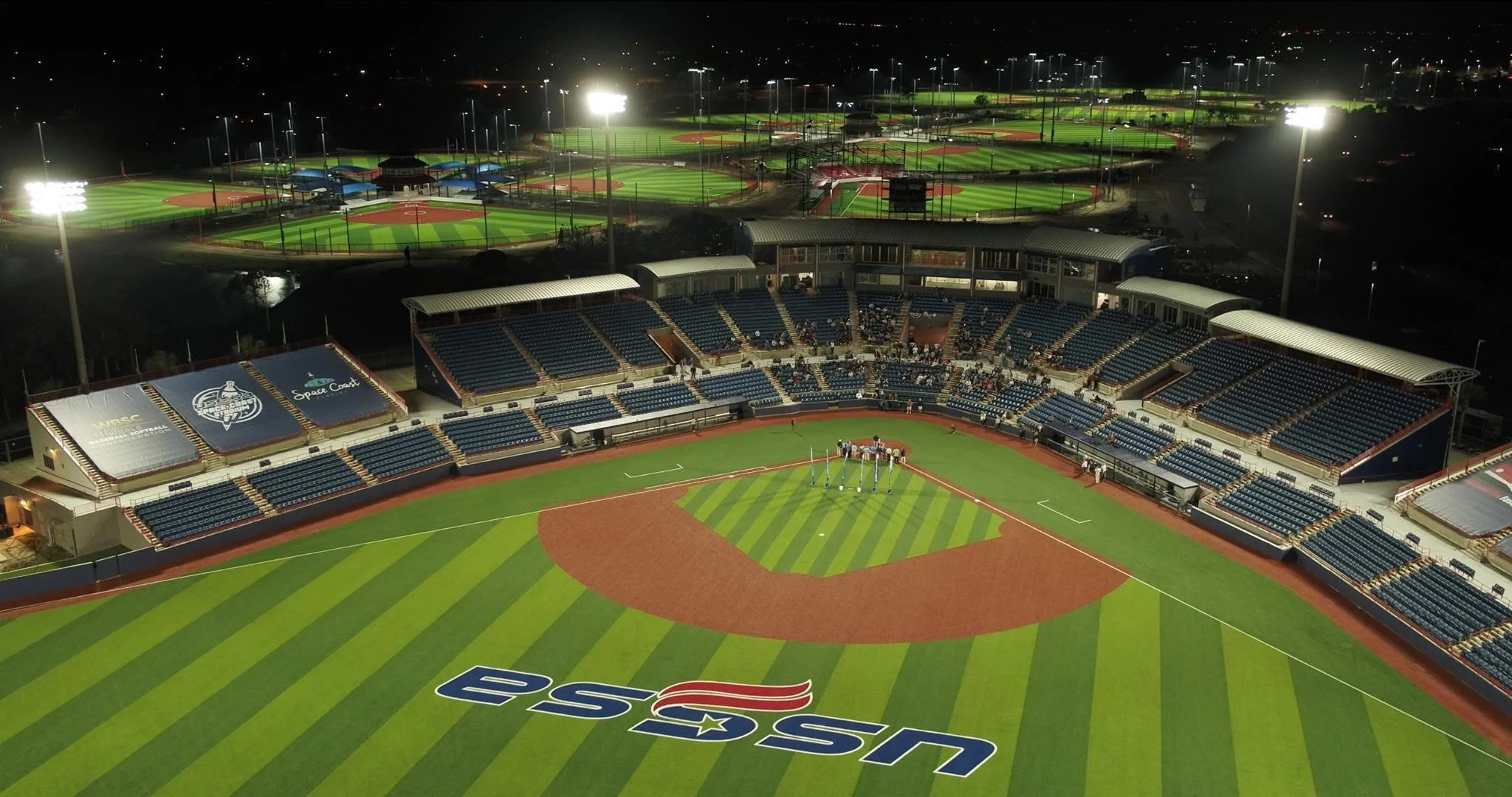
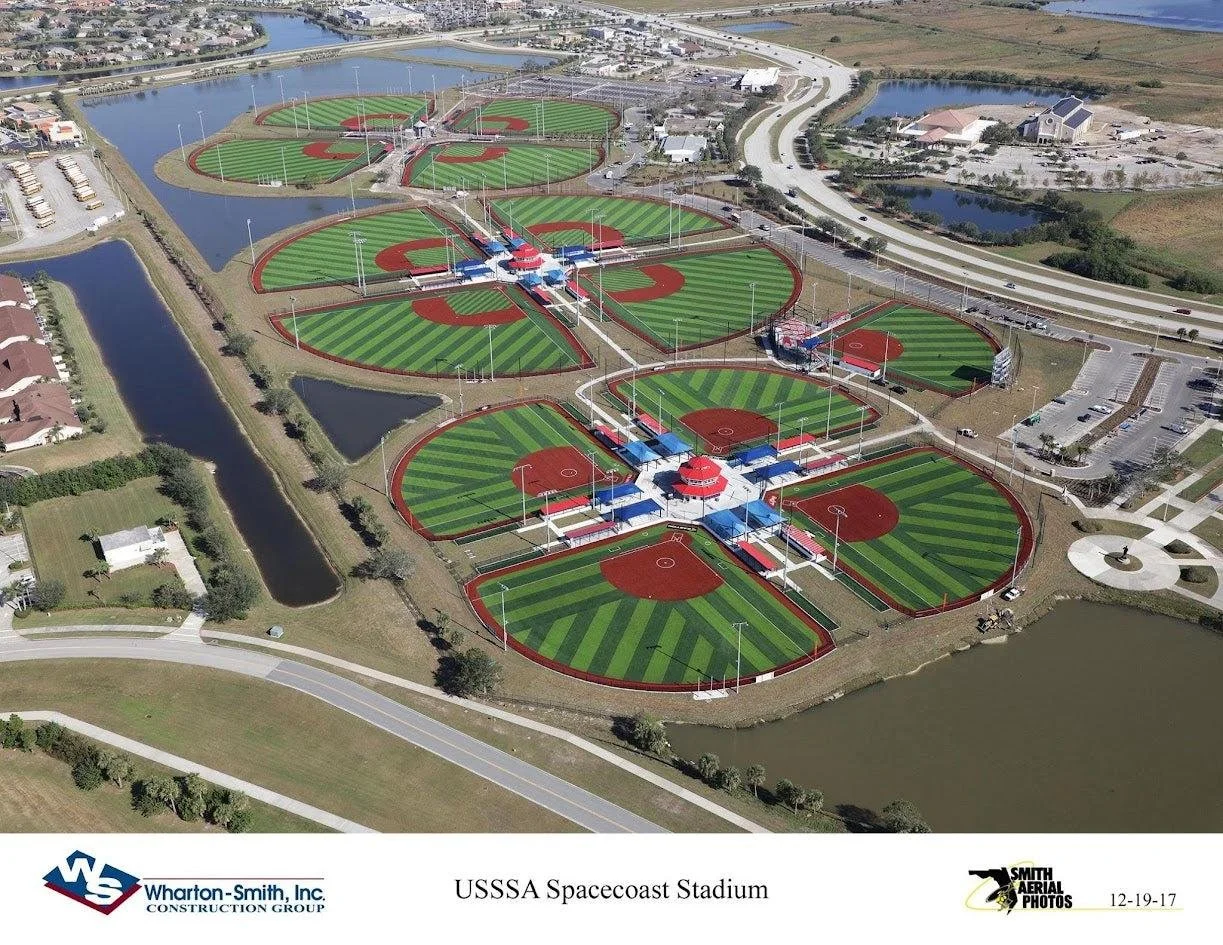
There are youth baseball complexes, and then there is Space Coast. The facility was built to handle large-scale baseball and softball events, with 15 turf fields, multiple regulation baseball diamonds, championship fields and a stadium that once served as a Major League Baseball spring training home. More than a million square feet of synthetic turf allows the complex to recover from rain far faster than traditional dirt-and-grass fields, an especially valuable feature during a Florida tournament season that can be dictated by weather almost as much as baseball. The entire property is designed around teams and families settling in for long stretches rather than simply arriving for one local game and heading home. Even the scale of the concessions, spectator areas and tournament operations makes the weekend feel more like an event than a normal Saturday at the neighborhood fields.
That atmosphere is part of what brings teams back. Players walk into a complex filled with uniforms from different parts of the state, games happening in every direction and enough activity that the entire property feels alive from the first pitch of the morning until the final games at night. Families may spend six, eight or ten hours around the complex depending on the schedule, which changes the way everyone prepares for the day. There are meals to think about, downtime between games, places to cool off, equipment to keep organized and younger siblings who eventually decide they have watched enough baseball for one lifetime. Somewhere in the middle of all of it, the actual games still have to be played. That combination of baseball and everything surrounding it is what turns Space Coast into a true tournament weekend rather than just another pair of games.
The Big-Field Version of Tournament Baseball
Moving onto the big field changes much more than the distance between the bases. At 13U, pitchers have more ground to cover, defenders have longer throws to make, runners have more space to exploit and hitters begin seeing the game open up in ways that simply were not possible on the smaller diamond. The physical demands increase as well, particularly during a weekend when a team may play multiple games Saturday and then return Sunday knowing every inning could be the last one of the tournament. Players who once seemed almost oversized on a youth field can suddenly look very young again when they step onto a regulation-sized diamond. That adjustment is part of the progression toward high-school baseball, and an away tournament at a facility like Space Coast is a pretty good place to see how far a group has come.
It also changes how teams have to manage a weekend. Pitching decisions matter more because arms are being asked to handle increased distances and workloads, while position players are covering considerably more ground during every inning. Recovery between games becomes more important, as does getting enough sleep the night before a long Sunday bracket run. Coaches have to think beyond the game happening directly in front of them because using every available pitcher Saturday can create a serious problem if the team advances deep into Sunday. Players begin learning that tournament baseball rewards more than talent because managing energy, focus and preparation can decide games before anyone realizes it. The older the players get, the less forgiving the weekend becomes.
Pack for Space Coast, Not Just for Baseball
One of the easiest mistakes families make is packing for the baseball game without packing for the baseball weekend. Space Coast has specific turf rules that immediately change the equipment list, including a prohibition on metal cleats and restrictions against gum and sunflower seeds on the playing surfaces. Players should arrive with molded cleats or athletic shoes, plenty of water and every piece of equipment checked before leaving home because replacing something after arrival is considerably more annoying than discovering the problem in the garage. The complex also restricts outside food and beverages, while players are permitted a personal water jug up to 74 ounces and a small cooler containing ice and towels. Knowing those rules before arriving can save families from hauling half the kitchen across the parking lot only to discover that it cannot come through the gate.
The rest of the packing list is less official but just as important. Extra uniforms, socks, compression gear, sunscreen, chargers, medications, recovery items and a backup pair of shoes suddenly matter when a family is sleeping somewhere other than home. A normal tournament bag may work perfectly for one afternoon, but an away weekend tends to expose anything that was forgotten very quickly. Florida weather can also create strange combinations where players are hot and sweating during the day but families want a sweatshirt once the sun disappears and a late game stretches into the evening. Parents eventually learn to pack for several different versions of the same weekend because travel baseball has a remarkable ability to make something unnecessary right up until the moment it becomes essential.
The Hotel Is Part of the Tournament Too
The hotel may be the most underrated part of an away tournament because that is where teammates get to become something other than teammates for a while. Players eat together, play video games, wander between rooms, hang around the lobby and get hours of unstructured time together that they rarely have during a normal local weekend. Those moments can strengthen relationships that eventually show up on the field because players who genuinely enjoy being together often communicate differently once the game begins. Some of the memories kids keep from travel baseball will have nothing to do with the final score and everything to do with what happened after everyone returned to the hotel. That is part of why families keep signing up for these weekends even when the packing, driving and expense occasionally make everyone question their sanity.
Of course, there is another side to the hotel experience. Twelve- and thirteen-year-old boys are not historically known for deciding on their own that 9:30 p.m. would be an excellent time to quietly prepare for bed, especially when ten of their teammates are staying within a few doors of them. Hotel hallways have a mysterious way of becoming sprinting lanes, room doors become revolving entrances, somebody inevitably gets too loud and eventually an adult remembers that first pitch is only a few hours away. The bonding is valuable, but so is recognizing that staying awake until midnight can become considerably less charming when a team has an early elimination game the next morning. One of the interesting questions at 13U is whether another year of maturity finally changes that equation, or whether the same hotel chaos simply occurs with bigger kids and louder voices.
And Then There Are the Parents
Away weekends create their own little parent culture too. Once the games end, parents who normally spend their Saturdays scattered along different parts of a ballpark suddenly find themselves eating dinner together, sitting around hotel lobbies and getting to know one another beyond the conversations that happen through a chain-link fence. Depending on the hotel, the unofficial team headquarters may eventually migrate toward a restaurant, patio or bar while the players are upstairs conducting their own version of team-building. Space Coast itself even feels built for adults settling in for a full tournament day, with concessions and amenities that are considerably more substantial than the standard hot-dog-and-Gatorade operation found at many youth parks. A travel weekend works best when the adults enjoy themselves too, because everyone involved is giving up an enormous portion of the weekend to baseball.
There is also a practical side to that social atmosphere. Parents become transportation coordinators, equipment finders, food planners, weather watchers, schedule analysts and occasional amateur psychologists when a player has a rough game and needs to reset before the next one. The adults may be relaxing after Saturday’s games, but Sunday morning still arrives whether anyone is ready for it or not. The best tournament weekends usually find a balance where parents enjoy the experience without forgetting that the kids still have baseball to play the next day. By 13U, most families have accumulated enough tournament stories to understand exactly how badly that balance can go when everyone gets carried away. Travel baseball provides plenty of entertainment before anyone ever steps onto the field.
Saturday Sets Up Sunday
Pool play creates a strange kind of pressure because every game matters even when nobody is technically being eliminated yet. Saturday determines seeding, possible matchups and the path a team will have to navigate once bracket play begins, which means one sloppy inning can create a much more difficult Sunday. Teams are also trying to win without exhausting every pitching option they may need later in the weekend, creating a constant balancing act between the game in front of them and the games they hope to play next. When the field includes unfamiliar opponents from farther away, there is also less ability to rely on previous experience or assumptions about what another team will do. That uncertainty is part of what makes larger tournaments interesting.
Then Sunday changes everything. Once the bracket becomes single elimination, there is no next game guaranteed and no opportunity to recover from a bad morning later in the standings. One strong pitching performance, one defensive mistake, one big inning or one clutch hit can decide whether a team is packing the cars or preparing for another game. Deep tournament runs become tests of roster depth because teams that survive the early rounds have to keep finding fresh arms, fresh energy and enough focus to play quality baseball as the day gets longer. Those Sundays can produce some of the best memories in travel baseball because every win buys the group a little more time together.
Weather Is Still Part of the Story
South Florida teams hardly need another reminder that weather can control a baseball weekend. Rain and lightning have already disrupted tournaments throughout the fall, sometimes ending games early or erasing entire days before teams get a chance to settle anything on the field. Space Coast cannot control lightning, and complex policy requires guests to leave the facility until lightning delays are cleared by staff. What the complex can do better than many traditional fields is recover once the weather passes because its extensive turf system does not require the same drying and field-maintenance process as dirt and natural grass. That does not guarantee uninterrupted baseball, but it can make the difference between waiting for a storm to clear and waiting several additional hours for a playable field.
That distinction matters after a fall in which teams have repeatedly watched weather become the biggest opponent on the schedule. A rainstorm at a traditional complex can leave standing water, damaged mounds and infields that require significant work before games can resume. Turf eliminates much of that recovery process and gives tournament organizers more flexibility when Florida weather inevitably becomes part of the weekend. Lightning will always stop play because player and spectator safety comes first, but once the all-clear arrives, teams at Space Coast often have a better chance of returning to baseball quickly. After enough washed-out weekends, simply having fields capable of handling rain begins to feel like a competitive advantage for the tournament itself.
The Weekend Matters Even After the Scores Are Forgotten
Travel baseball is expensive, time-consuming and occasionally absurd. Families drive hours to watch games that may last less than two hours, sleep in hotels so their children can wake up before sunrise, carry enough equipment to survive a small expedition and organize entire weekends around a schedule that can change with one thunderstorm. The kids will probably stay awake later than they should, parents will eat too much restaurant food, somebody will forget something important and at least one person will wonder why everyone willingly does this. Then the first game starts, teammates begin competing together and the entire chaotic weekend suddenly makes sense again.
That is why places like Space Coast remain favorites for so many travel-baseball families. The facility makes the games feel important, the unfamiliar competition makes the weekend interesting and the hotel gives players the kind of time together that cannot be recreated during a two-hour practice back home. For Jupiter Hammerheads Black, this weekend also represents another step into 13U baseball and another chance to see whether the progress made throughout the fall can turn into a meaningful tournament run. Saturday will establish the path, Sunday will determine how long that path lasts, and somewhere between the hotel hallways, turf fields, concessions and elimination games, another chapter of the season will be written. Whether everyone involved is noticeably more mature than they were on the last Space Coast trip remains an entirely separate question.
