
Behind the Games: How Concessions, Fundraising and Volunteer Work Keep Travel Baseball Moving
Most people experience youth baseball from the obvious side of the fence. They see the uniforms, the coaches, the tournaments, the practices and the games, and naturally that is where most of the attention goes. What they usually do not see is the amount of work taking place around all of it, the hundreds of small operational details that make a program function from one weekend to the next. Travel baseball is not simply a matter of registering a team, buying uniforms and showing up to play. There are tournament fees, equipment costs, field expenses, coaching costs, insurance, training, travel and countless smaller purchases that quietly add up throughout a season.
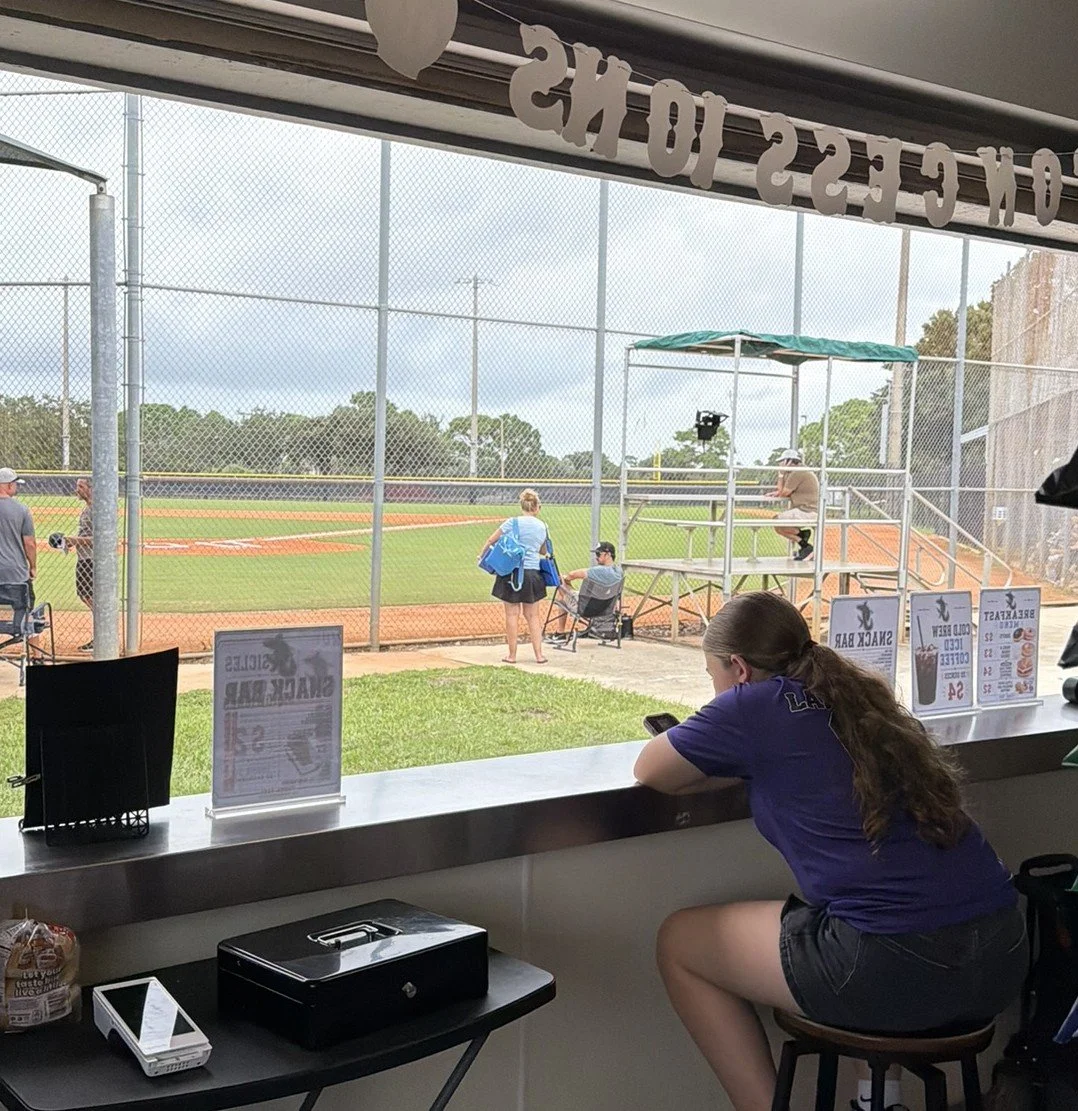
For the Jupiter Hammerheads, one of the most visible examples of that behind-the-scenes work has been the concession stand at the senior fields of Jupiter Community Park. The stand had historically been inconsistent, sometimes open and sometimes not, with plenty of room for improvement in organization, cleanliness and overall operation. That began changing when JTAA’s new Director of Concessions took over and made the senior-field stand a priority. The goal was not complicated: clean it up, organize it, make it reliable and create something families could actually count on being open when baseball was being played. What followed was a much larger transformation than simply putting someone behind a counter.
The physical operation itself needed attention. Inventory had to be organized, food preparation had to be handled more efficiently, supplies had to be stocked consistently and the stand had to meet the expectations that come with serving families every weekend. Menus were updated, pricing became easier to understand and the space itself was cleaned and brought into a much more functional routine. The difference between a concession stand that occasionally operates and one that becomes part of the regular game-day experience is mostly about consistency. Families notice when they can walk up between innings and know that food, drinks and snacks are available without wondering whether the doors will be open.
That consistency matters for more than convenience. Every sale becomes part of a much larger fundraising picture, and in youth sports that can make a meaningful difference. Travel baseball carries expenses that most families outside the sport never see, and the costs increase quickly when a program chooses to invest in professional coaching and structured development. The Hammerheads have made that investment a priority, relying on experienced professional coaches rather than building the program around parent coaching. That approach comes with a significant financial commitment every season, and fundraising is one of the ways the organization helps support that structure without putting every dollar directly on families.
The concession stand has become one of the most practical tools in that effort because it creates value on both sides of the counter. Families at Jupiter Community Park get a convenient place to buy food and drinks, while the team benefits from revenue generated during weekends that would otherwise pass without that opportunity. This past weekend offered a clear example. While the Hammerheads’ own tournament schedule in Port St. Lucie was being disrupted by rain and lightning, the concession operation back at Jupiter Community Park stayed open on both Saturday and Sunday. By the end of the weekend, concessions alone had generated more than $1,000 for the team.
That number becomes even more meaningful when it is placed alongside the broader fundraising effort. Sponsorships, donations and other team fundraising initiatives have combined to generate several thousand dollars during the early part of the fall season. None of those efforts replace the enormous financial commitment required to operate a competitive program, but together they help absorb costs that otherwise land entirely on families or team leadership. The important point is that fundraising at this level is rarely one big event or one large check. It is usually a collection of smaller efforts that compound over time, and a productive concession operation gives the team something it can rely on repeatedly throughout the season.
The operation has also become more efficient and more convenient for families. Modern payment options now allow customers to pay with cash, digital payments or credit cards, and a streamlined point-of-sale system helps volunteers move through orders quickly. Instead of relying on handwritten lists, improvised pricing or a slow manual checkout process, the stand can now handle a larger menu in a much cleaner way. That matters during the busiest parts of a baseball weekend, when several games may be happening at once and families are trying to grab food between innings or between games. Anything that shortens the line and simplifies the process makes the stand more useful to the people it is serving.
The team has also introduced eGift cards, giving families another way to support the program while purchasing something that can actually be used at the senior-field concession stand. That may seem like a small addition, but it reflects a larger change in how the operation is being treated. The stand is no longer being approached as an afterthought that happens to sell hot dogs and drinks. It is becoming a real part of the game-day environment, with better organization, better service and more ways for families to participate. Gift cards also create opportunities around holidays, birthdays, thank-you gifts and team events without turning every fundraising effort into another request for a donation.
The volunteer side of the operation may be the most important part of the story. Concessions do not run themselves, and there is no paid staff quietly handling everything in the background. Parents, family members and players give up parts of their weekends to work the counter, prepare food, restock coolers and help keep the stand moving. This weekend, Freddy LaFleur and teammate Wesley Castro were among the players who spent time helping their families at the concession stand. For kids who are usually on the field, being on the other side of the operation gives them a different perspective on how much work goes into creating the environment they get to enjoy.
That perspective matters in youth sports. Players see coaches arrive, fields prepared, uniforms ordered and tournaments scheduled, but they do not always see the hours of adult work that make those things possible. Helping with concessions is a simple way for them to participate in the effort beyond playing the game itself. It also reinforces the idea that being part of a team is not limited to at-bats, innings and defensive plays. Programs become stronger when players understand that everyone has a role, including the people behind the counter, the families cleaning up after games and the volunteers staying at the park long after their own child has finished playing.
This weekend created an unusual contrast for the Hammerheads. On the field, the team finally earned its first win of the fall with a 7–6 victory in Port Saint Lucie, only to see the remainder of the tournament wiped out by weather. Back at Jupiter Community Park, however, the organization was having one of its most productive weekends off the field. The concession stand stayed active, families continued supporting the program and fundraising continued even while the team itself was losing opportunities to play. In a season that has been defined by weather interruptions, that kind of progress matters because it gives the organization something productive to build on when baseball itself is being taken away.
It also highlights an important reality about competitive youth baseball. The visible part of the sport happens between the foul lines, but the sustainability of a team is built almost everywhere else. It is built through coaching, fundraising, organization, volunteerism and families willing to step into jobs that are rarely glamorous. A clean concession stand, a working point-of-sale system, a stocked refrigerator or a parent willing to spend an entire weekend behind a counter may not look important compared with a tournament win, but those things are part of the same ecosystem. Without them, the opportunities on the field become much harder to sustain.
The Hammerheads’ concession turnaround is still evolving, but the direction is clear. What was once inconsistent is becoming dependable, what was once basic is becoming organized, and what was once simply a place to buy food is becoming a real fundraising asset for the program. More importantly, it is becoming another place where families and players contribute to something larger than themselves. That is the side of youth baseball that rarely gets photographed or celebrated, but it is often the side that determines whether a program can keep improving from one season to the next.
The games will always be the reason everyone shows up. The wins, losses, tournaments and memories on the field will always matter most. But behind every successful youth baseball program is a group of people making sure the lights stay on, the coaches are supported, the expenses get covered and the opportunities keep coming. At Jupiter Community Park, one of the clearest examples of that work is happening behind the concession counter. Some families donate much more than many because they see a vision. They want to see our kids excel. Where professional coaches teach kids the right way. It is with utmost gratitude for those special families, or that special family that gives so much. But where others may not be able to give as much financially, there are other families that can certainly give their time.
